Embarking on a street food tour in Da Nang immerses your senses in bold coastal broths, crisp garden herbs, and vibrant evening pavement culture. As local food lovers based in Da Nang, we map neighborhood food stalls and test family recipes every week. From hand-pulled turmeric noodles to sizzling rice crepes and fiery coastal snails, this authentic 2026 culinary guide reveals the essential street dishes and lively quarters every visitor must taste.
Quick Summary:
- Signature provincial noodle: Mi Quang features wide turmeric noodles, concentrated braised broth, river shrimp, and toasted sesame crackers.
- Crispy table-roll feast: Banh Xeo and Nem Lui are wrapped by hand inside sheer rice paper with green herbs and rich peanut dipping sauce.
- Morning seaside comfort: Bun Cha Ca delivers fried fish cakes in a naturally sweetened broth of pineapple, pumpkin, and tomato.
- Bold local specialty: Bun Mam Nem pairs cold rice noodles with crisp pork belly and pungent fermented anchovy sauce.
- Evening gathering hubs: Helio Night Market, Son Tra Night Market, and late-night seafood halls along Vo Nguyen Giap.
What Makes Central Vietnamese Street Food Distinctly Addictive?
Central Vietnamese street cuisine stands out for its bold seasoning, deliberate textural contrasts, and generous mountains of fresh garden herbs. Unlike the delicate broths of Hanoi or the sweet-leaning dishes of Saigon, Da Nang’s culinary profile delivers vibrant chili heat, savory fermented notes, and refreshing herbaceous complexity.
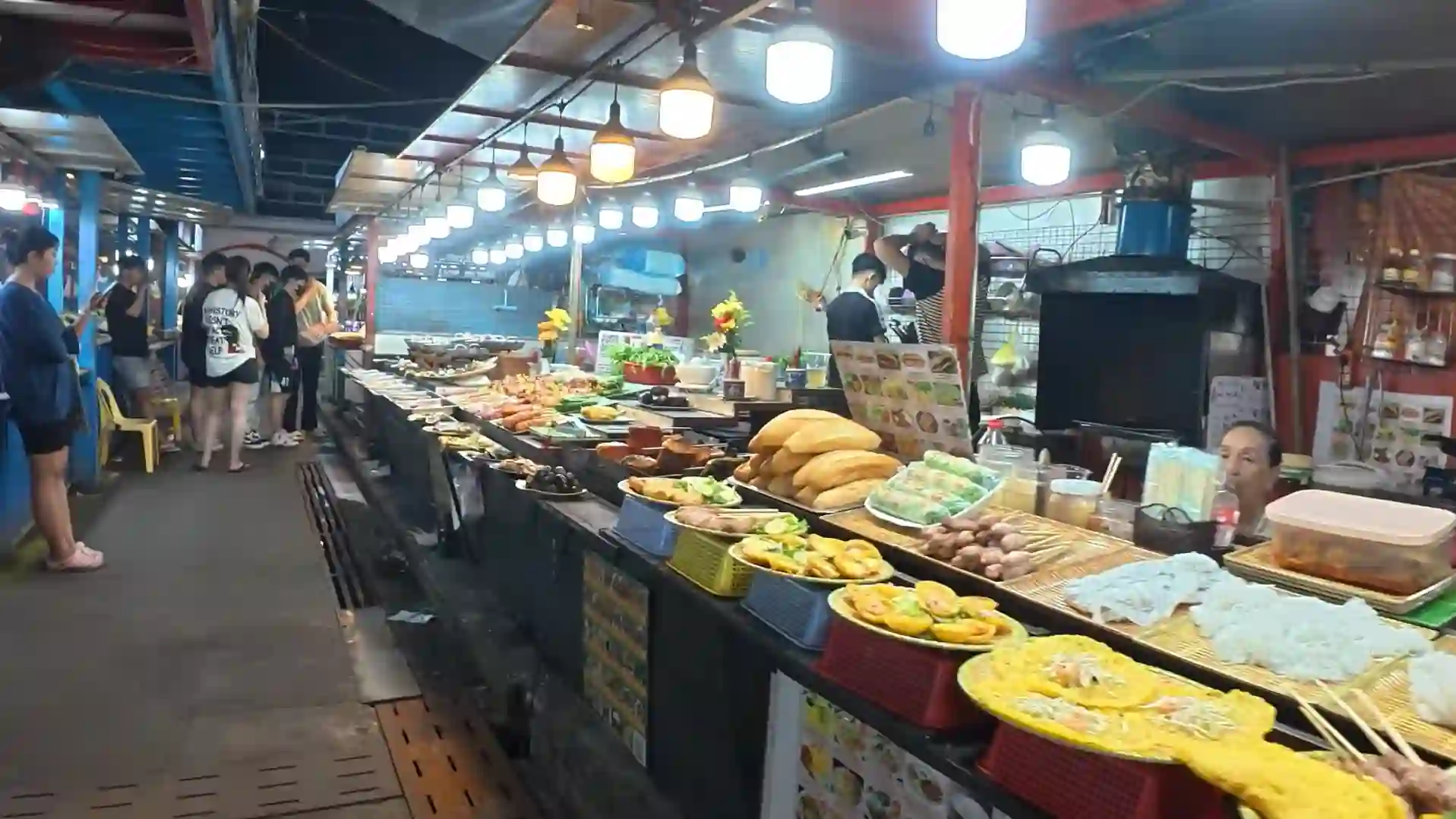
The city’s coastal position directly shapes its street stalls. Freshly landed squid, river shrimp, clams, and mackerel move from fishing trawlers to neighborhood cooking pots within hours. Dining unfolds informally on low plastic stools along sidewalk alleyways, where the warmth of bubbling broth cauldrons and the sizzle of charcoal grills create an energetic communal atmosphere.
The master street food reference table below details Da Nang’s iconic dishes, price benchmarks, and primary neighborhood streets:
| Iconic Local Dish | Key Ingredients & Proteins | Typical Bowl Price (VND) | Typical Price (USD) | Best Time of Day | Famous Street Locations |
|---|---|---|---|---|---|
| Mi Quang | Turmeric noodles, pork, shrimp, peanuts | 30,000 – 45,000 VND | $1.20 – $1.80 | Breakfast / Lunch | Hoang Dieu, Le Dinh Duong |
| Banh Xeo & Nem Lui | Crispy rice crepe, pork skewers, peanut sauce | 60,000 – 90,000 VND | $2.40 – $3.60 | Late Afternoon / Dinner | Hoang Van Thu, Yen Bai |
| Bun Cha Ca | Mackerel fish cakes, pineapple, pumpkin broth | 35,000 – 50,000 VND | $1.40 – $2.00 | Morning Breakfast | Nguyen Chi Thanh, Le Hong Phong |
| Bun Mam Nem | Roast pork, cold vermicelli, anchovy sauce | 30,000 – 45,000 VND | $1.20 – $1.80 | Lunch / Dinner | Tran Ke Xuong, Huynh Thuc Khang |
| Oc Hut (Steamed Snails) | River snails, lemongrass, ginger, chili | 40,000 – 65,000 VND | $1.60 – $2.60 | Late Evening | Le Duan, Pham Van Dong |
| Che Sau Rieng | Shaved ice, durian cream, jackfruit, jelly | 25,000 – 40,000 VND | $1.00 – $1.60 | Evening Dessert | Hoang Van Thu, Nguyen Van Linh |
Mi Quang as the Unrivaled Culinary Icon of the Province
Mi Quang is not merely a meal in Da Nang; it is a cultural institution. Originating in neighboring Quang Nam province, this distinctive preparation defies standard Western classifications by occupying a delightful space between noodle soup and dressed salad.
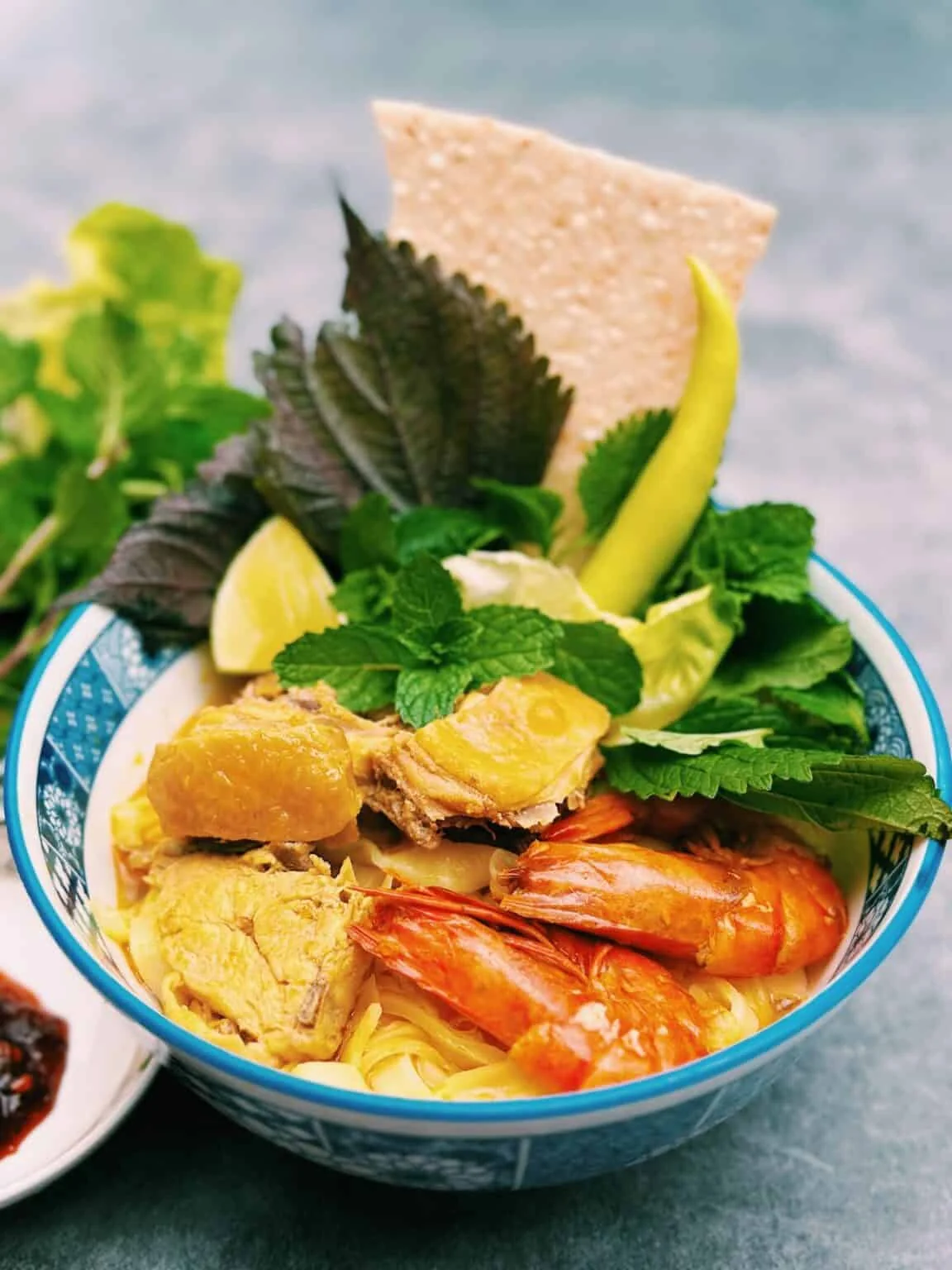
The dish begins with wide, flat rice noodles tinted golden yellow with fresh turmeric root. Rather than submerging the noodles in deep broth, cooks pour just a shallow ladle of concentrated, slow-simmered reduction made from pork bones, shallots, garlic, and annatto oil. The protein toppings vary delightfully by cook, ranging from braised pork belly and wild river shrimp to pasture chicken, boiled quail eggs, and tender snakehead fish.
Eating Mi Quang requires active participation. Diners tear crisp, toasted black-sesame rice crackers (banh trang me) directly into the bowl, add a squeeze of fresh calamansi lime, stir in sliced red chilies, and fold in generous handfuls of fresh water mint, banana blossoms, and crisp Vietnamese basil. The contrast between crunchy cracker, chewy noodle, and tender meat creates sensory perfection.
Banh Xeo and Nem Lui with the Art of Table Wrapping
Banh Xeo (sizzling Vietnamese pancakes) and Nem Lui (charcoal-grilled pork skewers) represent the ultimate social dinner ritual in Da Nang.
The crepe batter combines stone-ground rice flour, coconut milk, and turmeric powder. When ladled onto smoking-hot cast-iron pans, the batter sizzles violently, forming an ultra-crispy golden shell studded with sweet bean sprouts, green onions, pork slivers, and whole river prawns.
Alongside the crepes arrive plates of Nem Lui: finely minced seasoned pork wrapped around fragrant stalks of lemongrass, grilled over red-hot charcoal embers until caramelized and smoky.
To eat, you place a sheet of translucent dry rice paper on your palm, layer crisp mustard greens, cucumber slices, and green mango ribbons, add a golden wedge of Banh Xeo and a pork skewer, roll it into a neat cylinder, and dip it generously into a warm, savory sauce made from crushed roasted peanuts, pork liver pate, and fermented soybean paste.
Bun Cha Ca and Coastal Seafood Noodle Soups
Starting your morning in Da Nang with a steaming bowl of Bun Cha Ca is a treasured local habit. This coastal noodle soup showcases Da Nang’s intimate relationship with the East Sea.
The broth is naturally sweet and fragrant, simmered for hours using mackerel and flying fish bones combined with ripe pineapple chunks, sweet pumpkin cubes, tomatoes, and fermented bamboo shoots. The natural fruit acids balance the richness of the fish, producing a clear broth with zero fishy aftertaste.
The highlight of the bowl is the fish cakes (cha ca), made from fresh mackerel meat pounded by hand with shallots, black pepper, and garlic. Vendors serve two varieties: steamed fish patties with smooth textures and golden fried patties with satisfying exterior chewiness. A spoonful of spicy shallot pickles and shrimp paste completes the morning experience.
Bun Mam Nem and Snail Feasts for Flavor Seekers
Travelers seeking deep, unapologetic Vietnamese flavor should head directly to Tran Ke Xuong street, celebrated locally as Da Nang’s unofficial Bun Mam Nem alley.

Bun Mam Nem features a base of tender cold rice vermicelli topped with crispy roasted pork belly, shredded boiled pork ear, young green papaya, and roasted peanuts. The defining element is Mam Nem: a pungent, deeply fermented sauce made from raw anchovies and sea salt, tempered with crushed fresh pineapple, garlic, lime juice, and birds-eye chilies. Stirring the dark sauce throughout the cold noodles unleashes an explosion of salty, sour, sweet, and spicy notes.
Later in the evening, sidewalk stalls along Le Duan and Pham Van Dong fill with locals gathering around steaming pots of Oc hut. These small freshwater snails are braised with bruised lemongrass, sliced ginger, and chili paste. Guests pull the seasoned snail meat using toothpicks, enjoying the fiery, aromatic broth alongside cold glasses of local beer.
Evening Food Markets and Late-Night Culinary Quarters
Da Nang’s culinary life reaches its peak after sundown across vibrant outdoor night markets and seaside dining boulevards.
Helio Night Market near the city sports complex provides a clean, well-organized street food festival environment with dozens of illuminated booths serving grilled seafood skewers, Korean-style spicy tteokbokki, grilled rice paper (Vietnamese pizza), and fresh avocado ice cream.
Directly across the river near the eastern dragon bridgehead, Son Tra Night Market features lively open-air charcoal grills where cooks prepare fresh lobster, grilled sea urchins, and butter scallops for animated crowds of travelers.
Practical Health and Hygiene Tips for Street Food Lovers
Enjoying street dining in Vietnam safely requires observing a few simple local rules:
- Choose high-turnover stalls: Eat where local Vietnamese families, students, and office workers congregate in large numbers; rapid food turnover guarantees fresh ingredients.
- Observe clean ice practices: Cylindrical factory-made ice cubes with hollow centers are produced from purified municipal water and are safe to consume.
- Check hot cooking temperatures: Ensure noodle broths are boiling vigorously and fried crepes are cooked fresh to order rather than sitting under display cases.
- Wipe utensils: Use dry paper napkins provided at tables to wipe chopsticks and spoons before dining, exactly as local residents do.
Central Vietnamese Condiment Culture and Secret Dipping Sauces
The magic of Da Nang street dining lives in the jars of colorful condiments resting on every stainless steel and plastic tabletop.
Unlike Western dining where dishes arrive pre-salted, Vietnamese cooks consider their dish incomplete until the customer adds personal finishing touches. A small clay jar of Tuong Ot (caramelized Central Vietnamese chili jam) delivers a sweet, smoky, garlic-infused heat far richer than raw chilies. Alongside sits a dish of pickled purple shallots and whole cloves of garlic submerged in sweet rice vinegar, designed to cut the rich fattiness of braised pork belly and fried fish patties.
Every dish pairs with a custom-engineered sauce. Crispy Banh Xeo demands Tuong Dau Phong: a velvety, warm dipping sauce prepared from stone-ground roasted peanuts, fermented yellow soybeans, and pork liver pate. Bun Mam Nem requires a pungent reduction of fermented anchovy paste, balanced by crushed fresh pineapple juice, minced garlic, and fiery birds-eye peppers. Learning to adjust these condiments under the guidance of a local food guide elevates a simple sidewalk snack into an unforgettable culinary revelation.
Street Food Dining Etiquette and Pavement Culture Traditions
Immersing yourself in Da Nang’s pavement dining requires embracing a few beloved local customs.
A comprehensive Central Vietnamese culinary journey often expands south to neighboring Hoi An, where centuries of maritime trading created distinct gastronomy just thirty minutes from Da Nang.
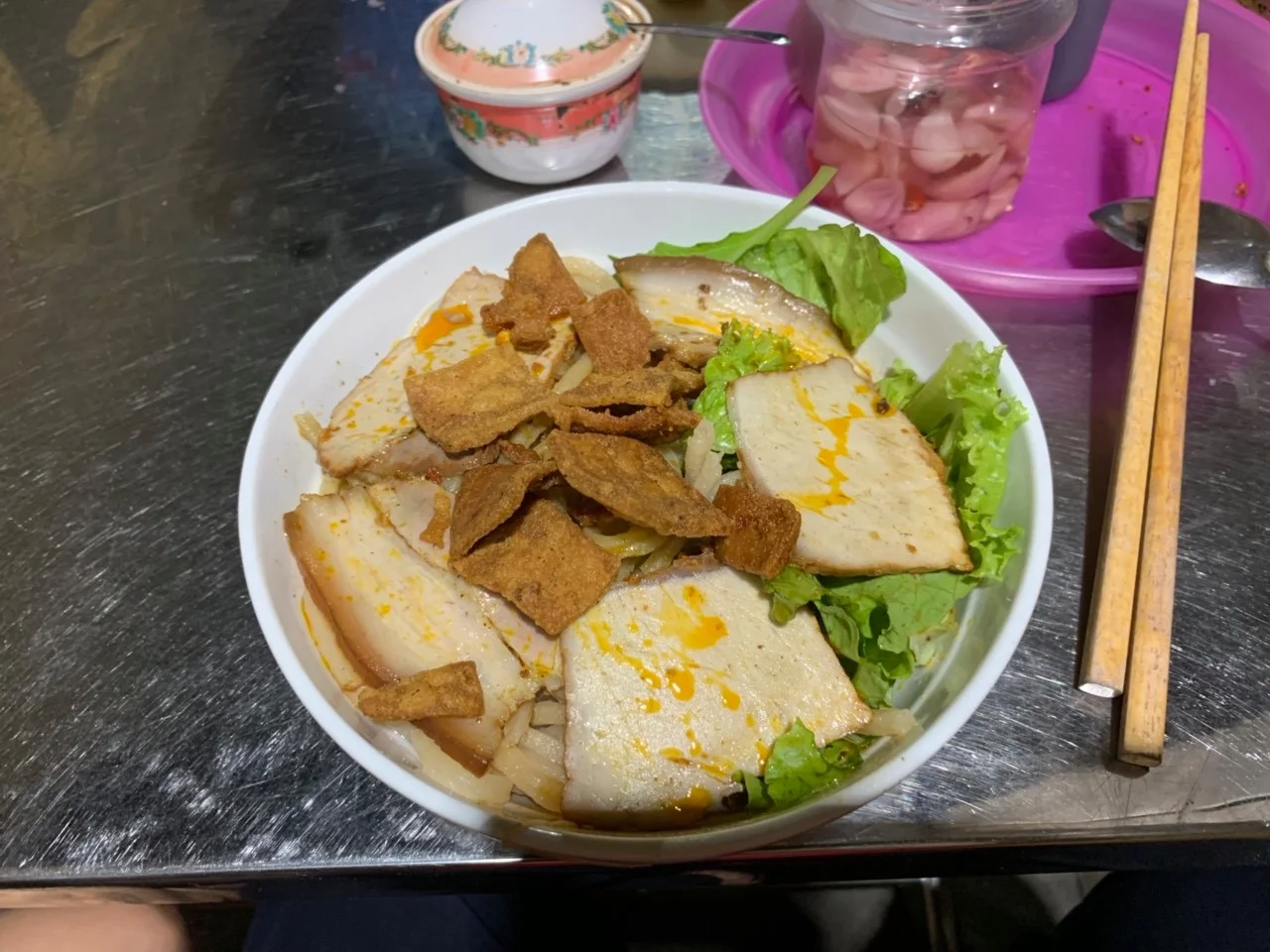
While Da Nang’s street food culture celebrates bold, punchy seasonings and oceanic bounty, Hoi An’s heritage recipes reflect subtle Chinese, Japanese, and French colonial culinary influences. The most celebrated example is Cao Lau, a chewy pork noodle dish found nowhere else in Vietnam. The noodles must be kneaded with alkaline water drawn from ancient Cham wells like Ba Le and mixed with ash from Cu Lao Cham firewood, giving them a distinct smoky flavor and firm bite.
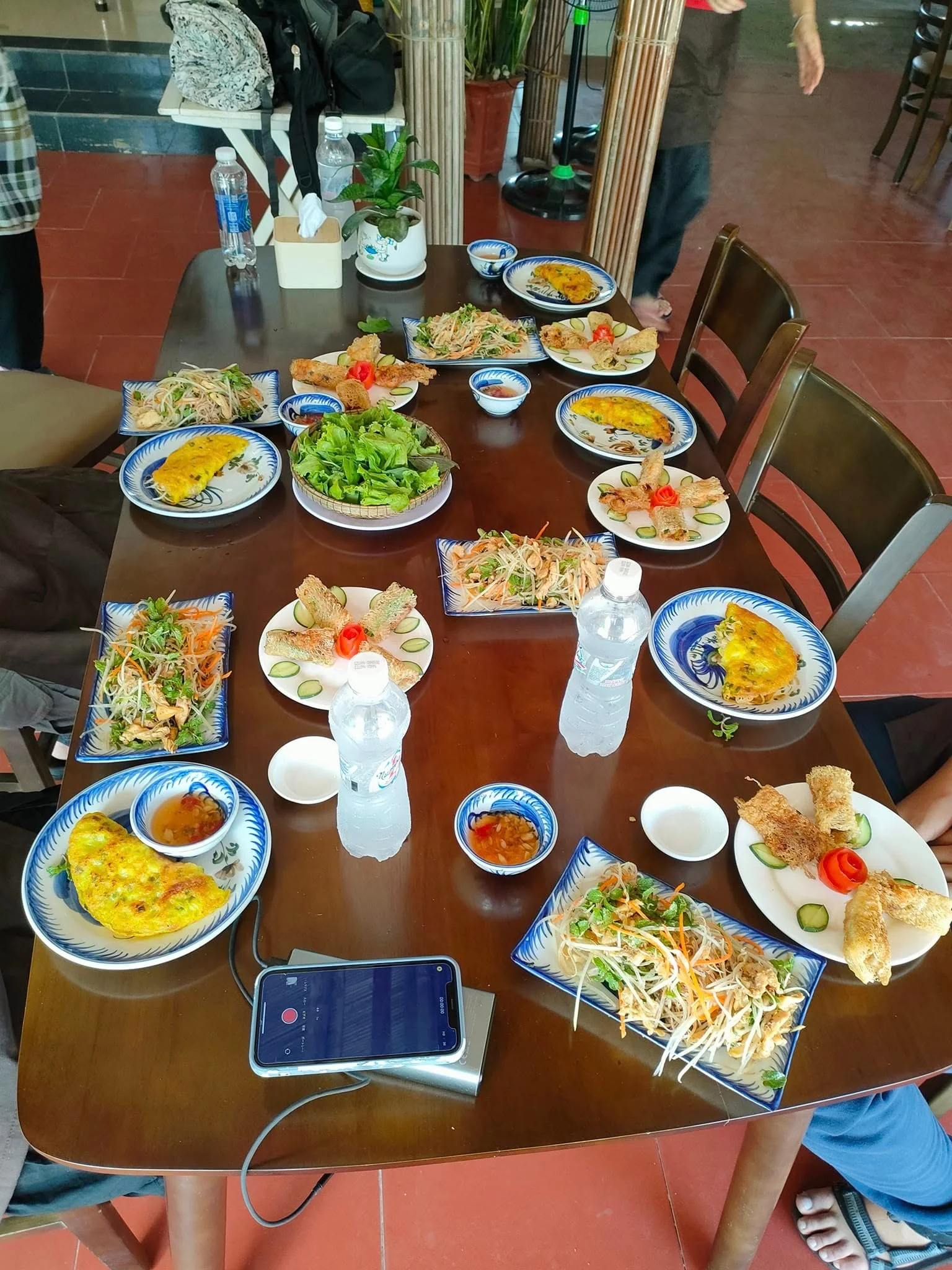
Travelers who venture to the rural outskirts of Hoi An around Cam Thanh can also experience rustic riverside dining at destinations like Lang Dua Xanh. After paddling through the water coconut groves, guests can savor authentic local specialties including crisp mini Banh Xeo pancakes loaded with river shrimp, fresh spring rolls, and fragrant herbal dipping sauces made with locally pressed fish sauce. Pairing Da Nang’s seafood noodle soups with Hoi An’s antique market snacks provides food lovers with a complete masterclass in regional Vietnamese flavors.
Answers to Common Inquiries About Da Nang Food Walks
Is street food in Da Nang excessively spicy?
Most noodle dishes are served with mild or savory base broths; fresh chili paste, sliced red peppers, and garlic vinegar sit in condiment jars on the table, allowing you to control the heat level entirely to your taste.
Can vegetarians find good street food options in Da Nang?
Yes. On the 1st and 15th days of every lunar month, dozens of local restaurants and street stalls switch to pure vegetarian food (Quan Chay), serving plant-based Mi Quang, tofu Banh Xeo, and vegan noodle soups.
How much should I budget for an evening street food walk?
Budgeting 150,000 VND to 250,000 VND ($6 to $10) per person easily covers three distinct street food courses, fresh fruit smoothies, and a sweet shaved ice dessert.
