
Many travelers search for a Da Nang to Hoi An train, but no direct rail line connects these destinations because Hoi An has no railway station. As local excursion coordinators and licensed boat drivers at Green Coconut Village (Lang Dua Xanh), our team regularly assists visitors arriving by rail at Da Nang Railway Station with luggage transfers and onward travel.
In this 2026 logistical guide, we clarify regional train facts, detail the closest railway hubs, compare road connection options, and explain how to travel comfortably from the station to Hoi An Ancient Town.
Railway facts and station connectivity between Da Nang and Hoi An
There is no direct train between Da Nang and Hoi An because Hoi An does not have a railway station or active train tracks.
The national North-South railway, operated by Vietnam Railways (DSVN), runs along the eastern coastline but bypasses the historic core of Hoi An entirely. When the French colonial administration built the railway network, engineers routed the trunk line inland to avoid coastal estuaries, leaving Hoi An without direct rail access.
Travelers arriving by train in Central Vietnam must disembark at one of two nearby stations:
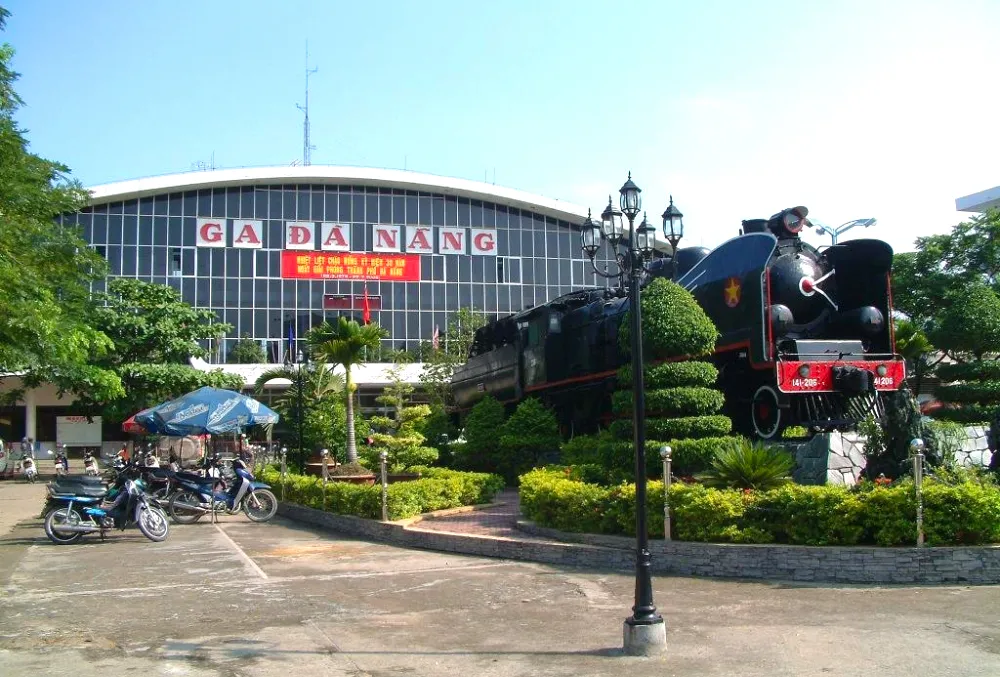
- Da Nang Railway Station (Ga Da Nang): Located at 791 Hai Phong Street in central Da Nang, this is the primary rail terminal for all Reunification Express trains. It sits thirty kilometers north of Hoi An, requiring forty-five to fifty-five minutes of road travel to reach the ancient quarter.
- Tra Kieu Railway Station (Ga Tra Kieu): Located in Duy Xuyen district, this rural station sits twenty kilometers southwest of Hoi An. Only a few slow regional passenger trains stop here daily, and local taxi availability remains limited.
For over ninety-five percent of travelers, Da Nang Railway Station serves as the primary arrival point, offering frequent express connections, luggage storage, and reliable onward road transit.
Best transit options from Da Nang Railway Station to Hoi An compared
Pre-booked private car transfer
A pre-booked private car provides the most convenient and comfortable transfer from Da Nang Railway Station to Hoi An. Your driver tracks your train arrival, meets you outside the concourse with a personalized name sign, and assists with luggage.
Fixed rates range from 250,000 to 350,000 VND ($10 to $14 USD) for a four-seater sedan and 350,000 to 450,000 VND ($14 to $18 USD) for a seven-seater SUV, with fares locked upon booking.
App-based ride hailing via Grab
Using the Grab app allows travelers to hail on-demand cars from the station parking area. Fares range between 280,000 and 380,000 VND ($11 to $15 USD) for standard sedans. However, fares can surge by thirty to forty percent during train arrival rushes or rainstorms, and drivers often struggle to locate passengers along crowded gates.
Traditional metered street taxi
Metered taxis like Mai Linh and Vinasun wait in designated ranks outside the terminal, costing 350,000 to 450,000 VND ($14 to $18 USD) to Hoi An. Passengers must ensure the driver activates the digital meter before departure to prevent flat-rate fare disputes upon arrival.

Shared tourist shuttle minivan
Shared shuttle minivans offer scheduled transfers between Da Nang transit hubs and Hoi An hotels for 120,000 to 150,000 VND ($5 to $6 USD) per passenger. While budget-friendly for solo backpackers, minivans operate on fixed timetables and stop at multiple hotels, adding thirty to forty minutes to travel time.
Local public bus service
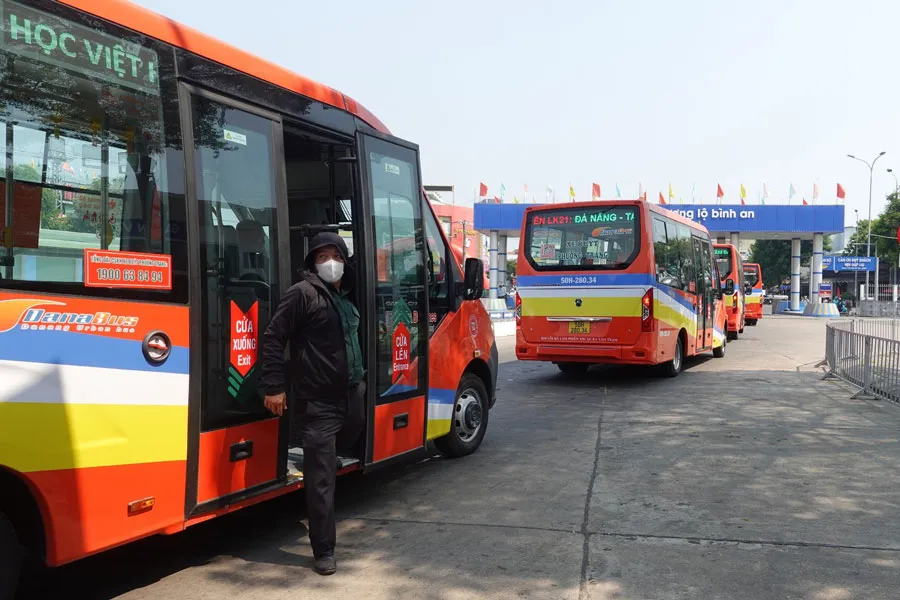
The public bus represents the cheapest option at 35,000 to 50,000 VND ($1.50 to $2.00 USD) per ticket. However, it does not stop at the station, requiring a short connection to Le Duan Street. Because city buses do not accommodate large suitcases, this suits only light backpackers.
This comparison matrix summarizes transit times, estimated fares, luggage capacity, and traveler suitability:
Arriving by train in Central Vietnam
The scenic Hue to Da Nang heritage tourist train
One of the most spectacular rail journeys in Southeast Asia is the heritage tourist train operating between Hue and Da Nang across the iconic Hai Van Pass. This three-hour coastal train ride hugs steep cliff edges, providing breathtaking vistas of Lang Co Bay and the East Sea before descending into Da Nang.
Daily departures occur in morning and afternoon windows, featuring air-conditioned carriages and panoramic windows. Upon reaching Da Nang Railway Station, passengers connect directly with road transfers to Hoi An.
Long-distance Reunification Express services
Express trains like SE1, SE3, SE5 (southbound from Hanoi) and SE2, SE4, SE6 (northbound from Saigon) stop at Da Nang daily. These trains offer four-berth soft sleeper compartments, six-berth hard sleeper cabins, and air-conditioned soft seats. If your sleeper train arrives early in the morning (5:30 AM to 7:00 AM), pre-arranging road transport ensures your driver is waiting on site, avoiding early morning touts.
Station exit navigation and avoiding taxi touts
When exiting the station concourse, pass through ticket barriers to the parking area. Aggressive independent drivers frequently approach tourists offering private rides at inflated rates. Decline these verbal solicitations politely, walk toward the designated taxi stand, or locate your pre-booked driver holding a printed name sign.
Continuing from the train station to Cam Thanh and Hoi An Old Town
Travelers heading to Hoi An can route their transfer directly to Cam Thanh Coconut Forest for riverside relaxation before checking into town accommodations.
Cam Thanh sits four kilometers east of Hoi An center, along the waterways of the Thu Bon River delta. Rather than waiting in a hotel lobby for 2:00 PM check-in, heading straight to the countryside allows you to unwind immediately after your rail journey.
At Green Coconut Village (Lang Dua Xanh), visitors board traditional round coracles for a relaxing basket boat tour through palm canals. The official experience costs 90,000 VND (~$3.60 USD) per adult, which includes the 45,000 VND forest conservation pass, crab fishing instruction, and energetic boat spinning acrobatics.
Child tickets for ages one to six cost 45,000 VND (~$1.80 USD), while infants under one year join free. Skilled local boatmen perform high-speed spins for an optional 100,000 VND (~$4.00 USD) gratuity, and traditional casting net demonstrations take place until 4:30 PM daily.
Practical railway connection checklist and traveler tips
Planning your train arrival and onward road transfer in advance guarantees a seamless transition from rails to riverside.
Review this practical checklist before your train departs:
- Confirm your train arrival time and carriage number on your DSVN ticket
- Save your driver contact details and onward hotel address offline on your phone
- Pre-book a private car if traveling with two or more people or heavy baggage
- Keep small Vietnamese Dong cash notes (20,000 to 100,000 VND) ready for drinks or tips
- Decline unsolicited taxi offers inside the Da Nang station arrival lobby
- Request direct drop-off at Cam Thanh Coconut Forest if arriving before hotel check-in
- Verify pedestrian walking hours if your hotel sits inside Hoi An Old Town
Always purchase Vietnam Railways tickets directly through the official DSVN portal or authorized booking platforms to guarantee genuine e-tickets and avoid counterfeit seat vouchers sold by unofficial street agents.
Frequently asked questions
Can you take a train directly from Da Nang to Hoi An?
No, you cannot take a train directly from Da Nang to Hoi An because Hoi An has no railway station or tracks. The North-South railway line passes through Da Nang Railway Station thirty kilometers to the north. All travelers must switch to a road transfer, such as a private car, taxi, Grab, or bus, to cover the final thirty-kilometer leg into Hoi An.
What is the closest train station to Hoi An Ancient Town?
The closest major railway hub to Hoi An is Da Nang Railway Station, located thirty kilometers north, with a driving time of forty-five to fifty-five minutes. Tra Kieu Railway Station sits twenty kilometers southwest of Hoi An, but it serves only a limited number of local trains daily and lacks reliable tourist transfer infrastructure.
How much does a transfer from Da Nang Railway Station to Hoi An cost?
A private car transfer from Da Nang Railway Station to Hoi An costs between 250,000 and 350,000 VND ($10 to $14 USD) for a four-seater sedan, or 350,000 to 450,000 VND ($14 to $18 USD) for a seven-seater SUV. Metered taxis cost 350,000 to 450,000 VND, Grab rides range from 280,000 to 380,000 VND, and shared shuttle vans cost 120,000 to 150,000 VND per person.
