Deciding which is better Da Nang or Hoi An depends on whether you prefer modern coastal energy or romantic UNESCO heritage alleys. As local tour coordinators and river guides at Green Coconut Village , our team assists travelers daily with regional transfers and eco-tours.
In this 2026 guide, we compare atmosphere, beaches, hotels, dining, and sightseeing logistics to help you select the ideal Central Vietnam base.
Conclusion Which is better, Da Nang or Hoi An?
Hoi An is better for travelers seeking historic architecture, lantern-lit streets, boutique resorts, and artisan culture, whereas Da Nang is better for visitors prioritizing wide sandy beaches, modern high-rise comforts, vibrant nightlife, and seamless transit links.

Because Da Nang and Hoi An sit thirty kilometers apart, choosing one does not exclude the other. Private transfers take forty-five minutes and cost 250,000 to 350,000 VND ($10 to $14 USD).
This matrix highlights the primary attributes of both Central Vietnam destinations:
| Category | Da Nang Features | Hoi An Features |
|---|---|---|
| Atmosphere | Modern coastal metropolis, wide boulevards, urban pulse | UNESCO World Heritage port, yellow facades, river life |
| Beach Access | Urban shoreline directly opposite hotels with lifeguards | Countryside beach four kilometers away with palm loungers |
| Accommodation | High-rise chain hotels, serviced suites, beach resorts | Boutique garden villas, courtyard retreats, rural homestays |
| Dining Scene | Fresh seafood markets, central noodle stalls, craft beer | Iconic local dishes (Cao Lau, White Rose), riverside cafes |
| Nightlife | Rooftop clubs, beach bars, weekend Dragon Bridge fire show | Lantern boat rides, night market strolls, acoustic lounges |
| Best For | Solo adventurers, digital nomads, urban beach lovers | Couples, families, photographers, cultural enthusiasts |
The style and atmosphere of the two cities
Da Nang delivers the spacious pulse of a modern commercial city, while Hoi An preserves the romantic character of a historic international port.
Da Nang is home to 1.2 million residents, featuring multi-lane avenues, sweeping bridges over the Han River, and glass towers. The city feels open and functional. Locals go about their work and study routines without depending entirely on tourism, offering visitors an authentic look at contemporary Vietnamese urban culture.
Hoi An feels like a preserved open-air museum. The Ancient Town holds over eight hundred protected historic buildings, including timber merchant shops, assembly halls, and mustard-yellow colonial houses. Municipal rules restrict motor vehicles from central streets between 3:00 PM and 9:30 PM daily, creating peaceful pedestrian lanes under glowing silk lanterns.

Core atmospheric distinctions include:
- Da Nang provides wide streets and contemporary coastal city conveniences.
- Hoi An offers compact lanes suited for slow walking and cycling.
- Da Nang maintains a residential economy alongside international tourism.
- Hoi An focuses its town center entirely around heritage hospitality.
Travelers seeking skyline vistas and coastal boulevards gravitate toward Da Nang, whereas visitors drawn to timeless romance and artisan craft villages prefer Hoi An.
Beach experience My Khe Beach versus An Bang Beach
Da Nang provides immediate walkable access to municipal beaches, whereas Hoi An requires a brief bicycle or taxi ride to reach rural shorelines.
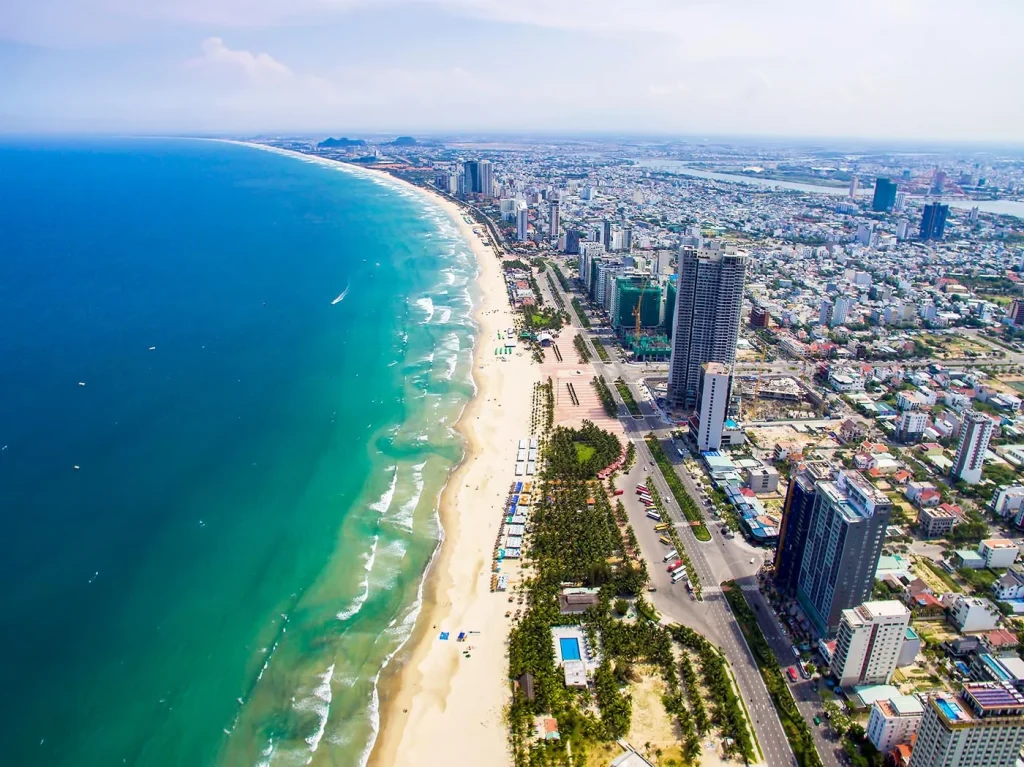
My Khe Beach stretches ten kilometers along Vo Nguyen Giap Boulevard. The sand is pale and fine, with gentle surf monitored by lifeguards between 5:00 AM and 6:30 PM daily. Guests staying along the coast can walk across the boulevard onto the sand within two minutes, making morning swims effortless.
An Bang Beach sits four kilometers northeast of Hoi An Ancient Town. The shoreline features open-air restaurants, thatched palapas, and wooden daybeds managed by family-run beach cafes. The atmosphere is bohemian and peaceful, offering a quiet escape from town crowds.
Consider this practical comparison when choosing your coastal base:
- Choose My Khe Beach for immediate hotel-to-sand access without hiring a taxi.
- Choose My Khe Beach for ocean surfing, parasailing, and jet-ski rentals.
- Choose An Bang Beach for quiet seaside loungers shaded by nipa palms.
- Choose An Bang Beach to enjoy scenic bicycle rides through countryside rice paddies.
Accommodation options in Da Nang and Hoi An
Da Nang specializes in high-rise hotel towers and luxury beach resorts, whereas Hoi An is celebrated for low-rise boutique villas and serene garden homestays.
In Da Nang, lodging clusters along My Khe Beach and the Han River. Mid-range properties featuring rooftop infinity pools cost 600,000 to 1,200,000 VND ($24 to $48 USD) per night. Luxury beachfront resorts along Non Nuoc Beach range from 3,500,000 to 7,500,000 VND ($140 to $300 USD) per night.
Hoi An limits building heights to three floors within town boundaries. Accommodation emphasizes garden courtyards, heritage woodwork, and pool terraces. Visitors can stay in historic merchant quarters, riverside eco-villas near rice paddies, or family homestays offering friendly local service.
This rate summary illustrates lodging price tiers in both destinations:
| Lodging Tier | Da Nang Typical Rates | Hoi An Typical Rates |
|---|---|---|
| Budget & Homestays | 250,000 to 450,000 VND ($10 to $18 USD); modern dorms and private studios | 200,000 to 400,000 VND ($8 to $16 USD); garden rooms with free bicycles |
| Mid-Range Hotels | 700,000 to 1,500,000 VND ($28 to $60 USD); sea-view rooms with rooftop pools | 650,000 to 1,400,000 VND ($26 to $56 USD); boutique retreats with courtyards |
| Luxury Resorts | 3,000,000 to 7,500,000 VND ($120 to $300 USD); global branded coastal resorts | 2,500,000 to 6,000,000 VND ($100 to $240 USD); colonial spa sanctuaries on the river |
Culinary specialties of Da Nang and Hoi An
Da Nang is known for energetic street seafood markets and central noodle soups, while Hoi An is famous for heritage recipes cooked with local well water.
Da Nang dining centers around fresh seafood along the coastal strip. Open-air restaurants display live prawns, crabs, and snails in aerated tanks, cooked to order with lemongrass and chili. Famous regional dishes include Mi Quang (turmeric noodles with pork and shrimp) and Bun Cha Ca (savory fish cake noodle soup).
Hoi An features culinary traditions developed through maritime commerce. The town signature dish is Cao Lau, made with noodles steeped in Cham well water, roasted pork slices, crispy rice croutons, and local greens. Other popular specialties include White Rose steamed dumplings and crispy Banh Xeo pancakes.
Important culinary details include:
- Da Nang street food prices run 30,000 to 45,000 VND ($1.20 to $1.80 USD) per bowl.
- Hoi An heritage dishes in the old quarter cost 40,000 to 60,000 VND ($1.60 to $2.40 USD).
- Da Nang offers broader variety for international dining and craft beer pubs.
- Hoi An features cooking classes combining morning market tours and boat rides.

Day Trip Logistics for Both Stays
Da Nang provides convenient access to northern mountain sights, whereas Hoi An is ideally situated for river eco-tours and craft villages.
From Da Nang, travelers reach Marble Mountains in fifteen minutes to explore limestone caves and pagodas for 40,000 VND ($1.60 USD). Ba Na Hills sits forty-five minutes inland, featuring cable cars and the Golden Bridge. Son Tra Peninsula offers scenic coastal drives to the Lady Buddha statue.
From Hoi An, visitors access Cam Thanh coconut waterways in ten minutes. Travelers navigate palm waterways in bamboo coracles during the basket boat tour at Green Coconut Village (Lang Dua Xanh). Tickets cost 90,000 VND (~$3.60 USD) per adult, which includes the 45,000 VND (~$1.80 USD) ecological conservation pass, safety life jackets, crab fishing, and spinning shows.
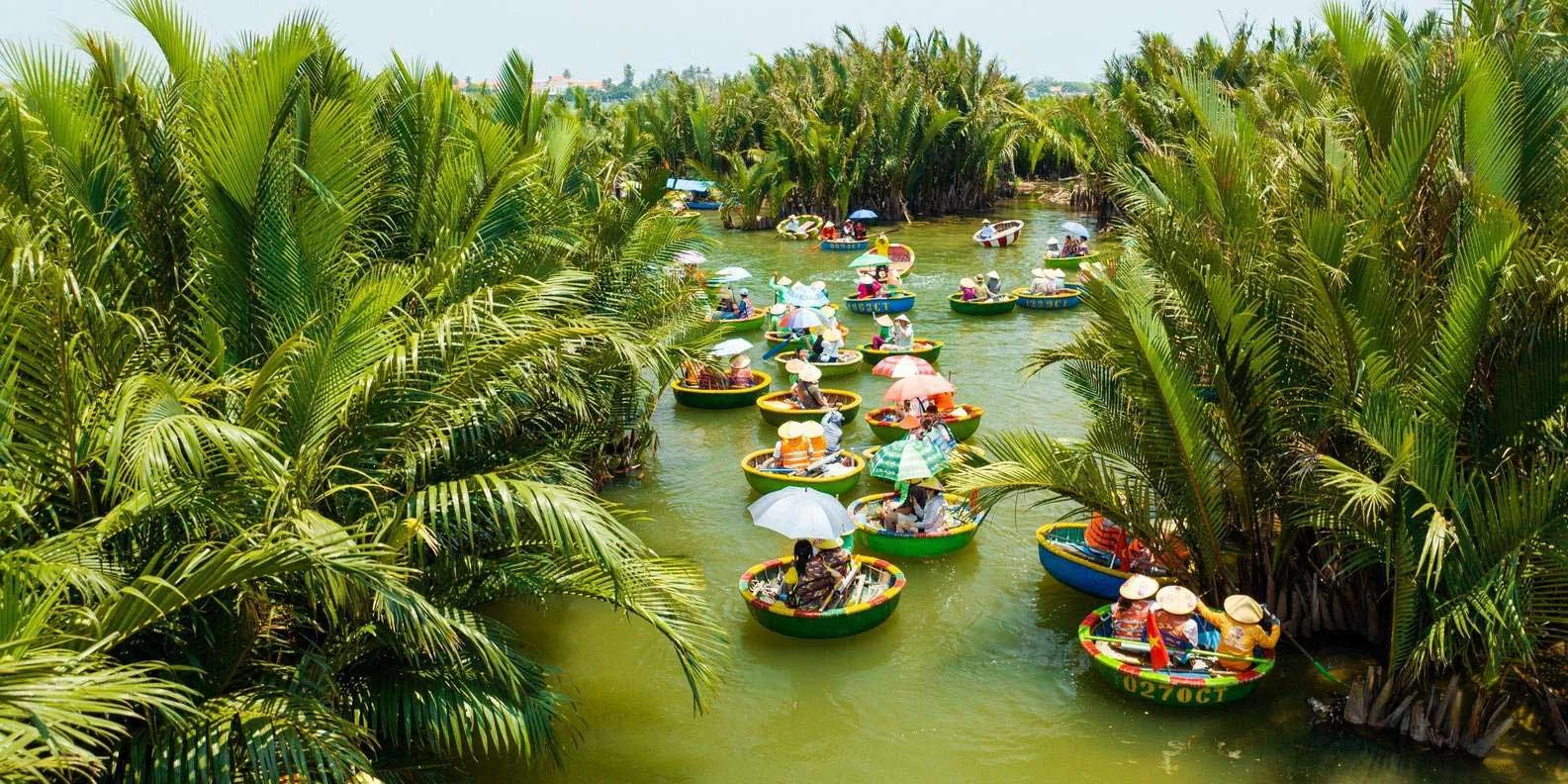
Children aged one to six pay 45,000 VND (~$1.80 USD), while infants under one join free. Sitting in the spinning boat involves an optional 100,000 VND (~$4.00 USD) tip for the boatman. Visitors often pair this river trip with an artisan lantern making class for 290,000 VND (~$11.60 USD).
Key logistical considerations:
- Da Nang travelers must travel forty-five minutes south to visit Hoi An old streets.
- Hoi An travelers face longer journeys when catching flights or visiting Ba Na Hills.
- Scooter rentals cost 120,000 to 180,000 VND ($5 to $7 USD) per day in both towns.
- Booking a direct transfer via how to get from Da Nang to Hoi An simplifies travel between bases.
Why a Split Stay Offers the Best Trip
Because Da Nang and Hoi An sit forty-five minutes apart, dividing your trip between both destinations offers the most rewarding vacation strategy.
Splitting your accommodation lets you experience both towns without daily highway commutes. Spend your first two nights in Hoi An to wander morning alleys and watch floating lanterns at dusk. Then move to a Da Nang beachfront hotel for direct beach access and quick airport transfers on departure day.
Consider following our curated Da Nang Hoi An itinerary 4 days route:
- Day 1: Arrive in Da Nang, explore Marble Mountains, and check into your Hoi An hotel.
- Day 2: Morning basket boat tour at Green Coconut Village, lantern workshop, and evening river walk.
- Day 3: Morning excursion to Ba Na Hills, followed by afternoon check-in at your Da Nang beach resort.
- Day 4: Morning swim at My Khe Beach, scenic drive around Son Tra Peninsula, and airport transfer.
Frequently asked questions
Is it better to stay in Da Nang or Hoi An for first-time visitors?
First-time visitors who prioritize historic charm, cultural crafts, compact walkable streets, and romantic river views should base themselves in Hoi An for at least two nights. Travelers who want immediate beach access, high-rise hotel amenities, diverse nightlife, and proximity to an international airport will prefer Da Nang.
Can you easily take a day trip from Da Nang to Hoi An?
Yes, taking a day trip between Da Nang and Hoi An is simple and common. The thirty-kilometer journey takes forty-five minutes by private car, taxi, or shuttle bus. Travelers can spend the morning riding basket boats in Cam Thanh, explore Hoi An Ancient Town in the afternoon, dine by the river, and return to Da Nang by 9:30 PM.
Which destination is more budget-friendly for backpackers and families?
Da Nang is slightly more budget-friendly for daily meals and transport because local street markets cater to residents. However, Hoi An provides an excellent selection of budget homestays and boutique villas with swimming pools priced below $25 USD per night, although dining inside the heritage quarter carries minor tourist premiums.
