
Yes, you can take your handmade lantern on a plane without issue. Whether you crafted a silk globe in Hoi An ancient town or built a bamboo frame in Cam Thanh, airlines and airport security permit decorative lanterns in carry-on and checked luggage. Thousands of travelers fly out of Da Nang Airport each month carrying these colorful souvenirs home.
Transporting delicate craftwork across flights requires basic care. A traditional Hoi An lantern features shaved bamboo struts, fine silk, water-based glue, wooden rims, and a metal hanging hook.
Packing it carelessly into a crammed bag risks bending the ribs or tearing the fabric. If your lantern includes battery-powered LED lights, you must also follow international aviation battery rules.
This guide explains everything you need to know about flying with your handmade lantern, including airline security rules, folding steps, suitcase packing tips, battery regulations, and customs clearance.
Essential Airline and Security Regulations Guide
Major aviation security agencies, including the TSA in the United States, EASA in Europe, and CAAV in Vietnam, classify silk lanterns as decorative handicrafts. They are permitted on commercial passenger flights.
Airport screeners inspect luggage for weapons, explosives, flammables, and hazardous electronics. A standard Hoi An lantern contains none of these items.
Cured bamboo struts register on X-ray monitors as harmless organic material, and natural silk fabric is non-hazardous. The small steel hook and tension ring appear as thin wire, far too small and blunt to trigger security concerns.
The only strict ban involves sky lanterns (Kongming lanterns). Sky lanterns use open flames to produce hot-air lift, posing a severe flight hazard. In contrast, your handmade Hoi An lantern is a static decorative craft designed for hanging display or electric illumination.
With no open flame or combustible fuel, airport security clears your lantern without delay.
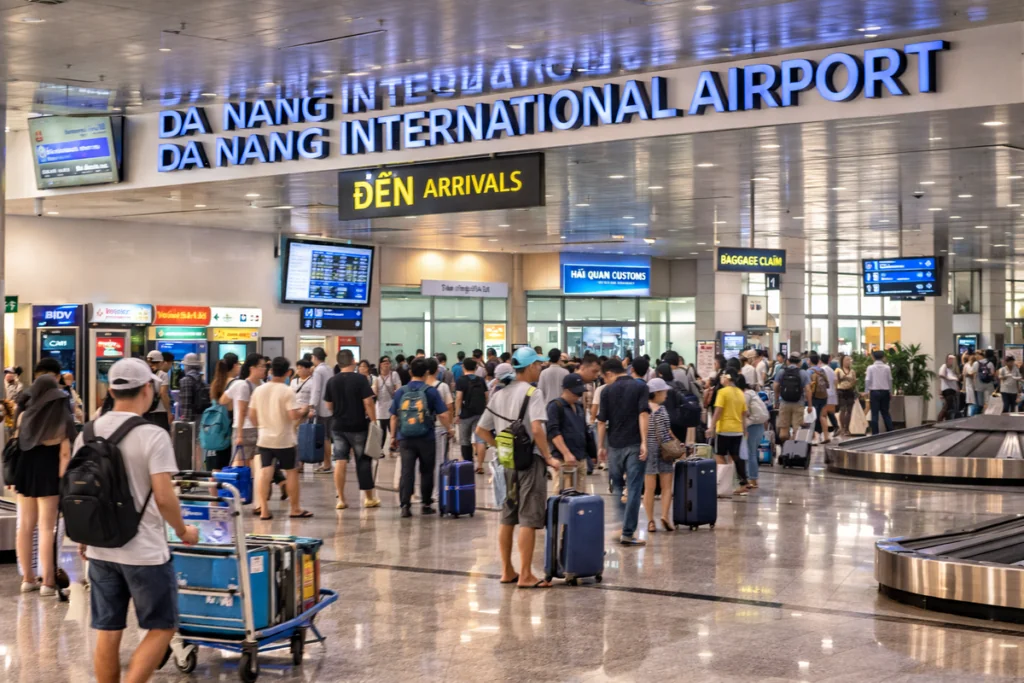
Carry On or Checked Baggage Which Option is Safer?
Carrying Your Lantern in Cabin Luggage
Carrying your lantern into the cabin is the safest choice. Checked baggage undergoes rough sorting chutes and baggage carts. Inside cargo holds, heavy suitcases are stacked tightly, which can flex luggage shells and snap bamboo struts.
Keeping your lantern in your cabin roller bag or backpack lets you maintain direct custody. You can place it into the overhead bin on top of soft bags or slide it under the seat. Once collapsed, a handmade lantern occupies minimal space.
The main constraint is cabin baggage allowances on budget carriers like Vietjet Air or AirAsia, which restrict cabin bags to one piece under 7 kilograms plus one small personal item.
Packing Your Lantern in Checked Luggage
Packing your lantern in checked luggage is convenient if you travel with large rolling suitcases, keeping your hands free in transfer terminals.
However, checked luggage requires disciplined packing. Never pack an unprotected lantern inside a soft duffel bag. If checking your lantern, collapse it completely, wrap it in bubble wrap, and cushion it in the center of a hard-sided suitcase surrounded by clothing.
| Travel Factor | Carry-On Baggage | Checked Luggage | Recommended Choice |
|---|---|---|---|
| Physical Damage Risk | Extremely low (direct custody) | Moderate to high (crush risk in hold) | Carry-On |
| Allowance Impact | Counts toward 7 kg cabin limit | Fits inside 20-30 kg checked limit | Checked Luggage |
| Airport Security Check | Standard carry-on X-ray screening | Automated hold baggage screening | Both Equal |
| Fragile Silk Protection | Zero external pressure applied | Requires dense surrounding clothes | Carry-On |
| Battery Safety Rules | Mandatory for loose lithium batteries | Alkaline permitted; lithium banned | Carry-On |
| Best Suitable For | Single delicate silk lanterns | Multiple lantern gifts (3+ items) | Carry-On for 1-2 items |
The Traditional Collapsible Mechanism
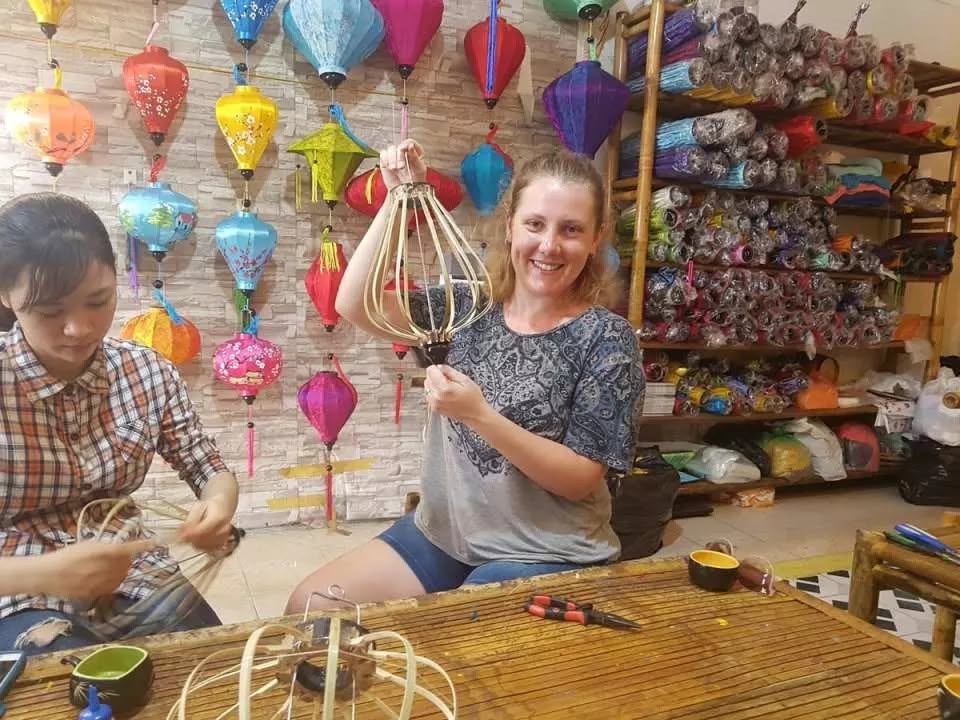
If you attended a workshop in Hoi An, your instructor demonstrated how to fold your craft. If you need a reminder before packing, follow these steps:
- Locate the Metal Hook: Look inside the top wooden collar to find the wire hook connected across the upper rim.
- Support the Base: Hold the bottom wooden base gently with one hand, keeping the hanging silk tassel clear.
- Release Tension: Push down gently on the upper collar while unlatching the wire lever. Tension releases smoothly.
- Guide the Ribs Inward: Guide the bamboo ribs inward so the silk folds into soft pleats between struts.
- Flatten into a Cylinder: Once collapsed, your 30-centimeter globe lantern transforms into a compact cylinder measuring just 4 to 6 centimeters across.
- Express Class Lanterns: These lanterns use pre-assembled skeletons made by master carpenters. Balanced hinge joints make folding quick and smooth.
- Full Bamboo Class Lanterns: If you bent and wired the struts yourself, fold slowly to prevent wire ends from catching on the silk.
Step-by-Step Packing Guide to Prevent Damage
Step 1: Wrap in Breathable Material
Do not wrap a freshly made lantern in plastic cling film while glue cures. Water-based adhesives need 24 hours to set in tropical humidity. Trapping moisture inside plastic film can cause silk to stick together or develop mildew.
Wrap the collapsed lantern in clean tissue paper or craft paper, then add an exterior layer of bubble wrap to absorb impacts.
Step 2: Secure the Wooden Tassel and Metal Hook
The decorative tassel consists of fine rayon or silk threads on a carved wooden bead. Smooth the tassel downward, wrap a strip of paper tightly around it, and tape the tube closed. Fold the top metal hanging loop flat against the wooden collar so it cannot poke neighboring items.
Step 3: Use the Luggage Sandwich Technique
When packing your collapsed lantern inside a suitcase, use the sandwich method:
- Bottom Cushion: Lay a thick layer of soft clothes (jeans or hoodies) across the suitcase bottom.
- Central Placement: Place the wrapped lantern in the center of the suitcase, away from outer zippers and wheels.
- Lateral Support: Pack rolled garments (socks, t-shirts) snugly along both sides of the lantern cylinder.
- Top Shield: Cover the lantern with another layer of flat clothing. The suitcase should close easily without pressing hard against the frame.
Step 4: Use a Studio Protective Box
If you craft your lantern at a dedicated studio like Lang Dua Xanh in Cam Thanh, you receive a reinforced cardboard travel sleeve. These boxes feature rigid corners designed to resist luggage pressure. Always pack your lantern inside this sleeve before placing it into your suitcase.
Battery, LED, and Electrical Rules for Flight Security
Many travelers buy miniature LED light pucks or battery fairy strings in Hoi An to illuminate their lanterns at home. Lighting accessories must comply with aviation security standards.
IATA regulations govern portable electronic devices and batteries on passenger aircraft:
- Alkaline Batteries (AA, AAA): Standard disposable alkaline batteries are permitted in carry-on and checked baggage. If your light uses AAA batteries, remove them from the casing to prevent accidental activation.
- Lithium-Ion Batteries (Rechargeable): If your lantern light has an integrated rechargeable lithium battery or USB power pack, aviation safety rules mandate that it must stay in your carry-on cabin baggage. Lithium batteries are prohibited in checked cargo holds due to fire risks.
- LED Tealight Button Cells: Inexpensive plastic tealight candles with button batteries are allowed in checked luggage if securely enclosed inside the plastic casing. Keeping all small electronics in your carry-on bag simplifies screening.
International Customs and Biosecurity Regulations
How Hoi An Craft Bamboo is Treated?
Travelers often ask whether customs will confiscate handmade bamboo lanterns. The answer is almost always no, provided your lantern came from an authentic artisan workshop. Fresh green bamboo cut directly from nature is confiscated because it can harbor pests. However, traditional lantern crafting in Hoi An relies on a multi-stage curing process:
- Boiling and Salt Soaking: Raw bamboo poles are soaked in salt-water baths or boiled for hours to remove natural sugars that attract pests.
- Kiln Baking and Drying: The bamboo is seasoned and baked in drying kilns until moisture content falls below 10 percent.
- Stripping and Lacquering: Struts are planed smooth, stripped of green bark, and coated with protective lacquer.
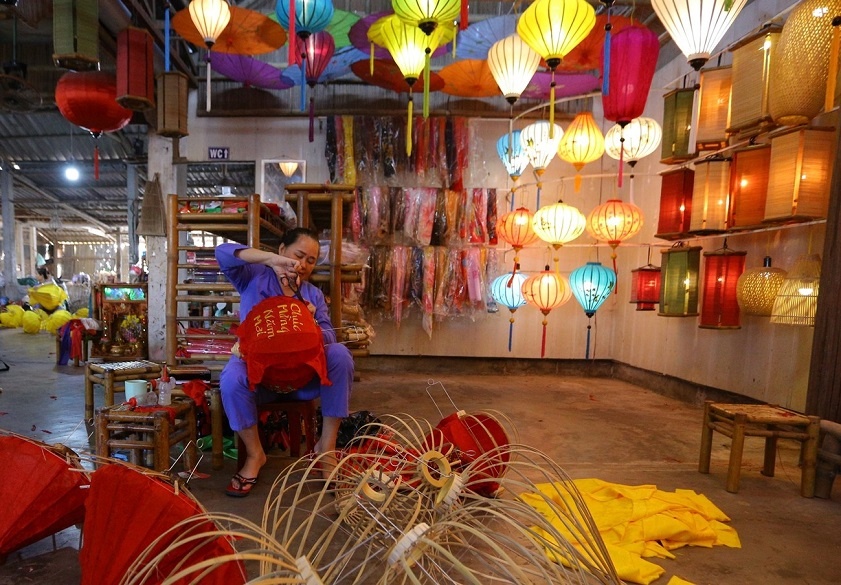
This commercial curing renders the bamboo biologically inert and pest-free, meeting international agricultural import standards.
| Country or Region | Biosecurity Authority | Rule on Bamboo Lanterns | Mandatory Declaration? | Clearance Rating |
|---|---|---|---|---|
| United States | USDA / CBP | Permitted (dry craft, no bark or insects) | Yes (declare plant souvenirs) | 99% Instant Clearance |
| Australia | Dept. of Agriculture (DAFF) | Permitted if dry, bark-free, and pest-free | Yes (mandatory on passenger card) | 95% Cleared on Inspection |
| New Zealand | Ministry for Primary Ind. (MPI) | Permitted if cured and free of seeds/soil | Yes (mandatory on arrival card) | 95% Cleared on Inspection |
| European Union | National Customs Agencies | Permitted as finished processed handicraft | No formal declaration needed | 100% Seamless Entry |
| United Kingdom | DEFRA / Border Force | Permitted as processed ornamental wood craft | No special import permit needed | 100% Seamless Entry |
| Canada | CFIA / CBSA | Permitted as finished dry wood souvenir | Yes (declare all wooden items) | 99% Instant Clearance |
Golden Rule Always Declare Plant Materials on Arrival
When flying into countries with strict quarantine rules such as Australia, New Zealand, or the United States, always tick “YES” on your arrival declaration card where it asks about wooden items, bamboo, or plant articles.
Declaring an item simply indicates that you have a handicraft for routine visual inspection. The biosecurity inspector will examine your collapsed lantern, confirm that the bamboo is dry, bark-free, and clean, and return it to you immediately. If you fail to declare a wooden item and quarantine dogs alert to your bag, you risk on-the-spot fines ranging from $300 to over $1,500 USD.
Restoring Lanterns After Transit
Smoothing Wrinkled Silk with Warm Steam
Never apply a hot iron directly to the silk of an assembled lantern. Direct heat will melt synthetic fabric blends or scorch fine silk.
Instead, expand the lantern by locking the internal wire tension ring into position. Hang the lantern in your bathroom while running a hot shower, or use a handheld garment steamer held 15 centimeters away from the fabric. Warm airborne moisture relaxes silk fibers, allowing frame tension to pull creases smooth within ten minutes.
Realiging Shifted Bamboo Struts
If a bamboo rib shifted out of alignment during transit, moisten your fingertips with warm water and gently press the strut back into symmetrical spacing. Because cured bamboo retains heat-shaped memory, it settles back into place once dried under tension.
If a small edge of silk fabric lifted from a bamboo strut, use a toothpick to apply a tiny drop of clear PVA craft glue under the seam, press firmly with your thumb for thirty seconds, and allow it to dry thoroughly.
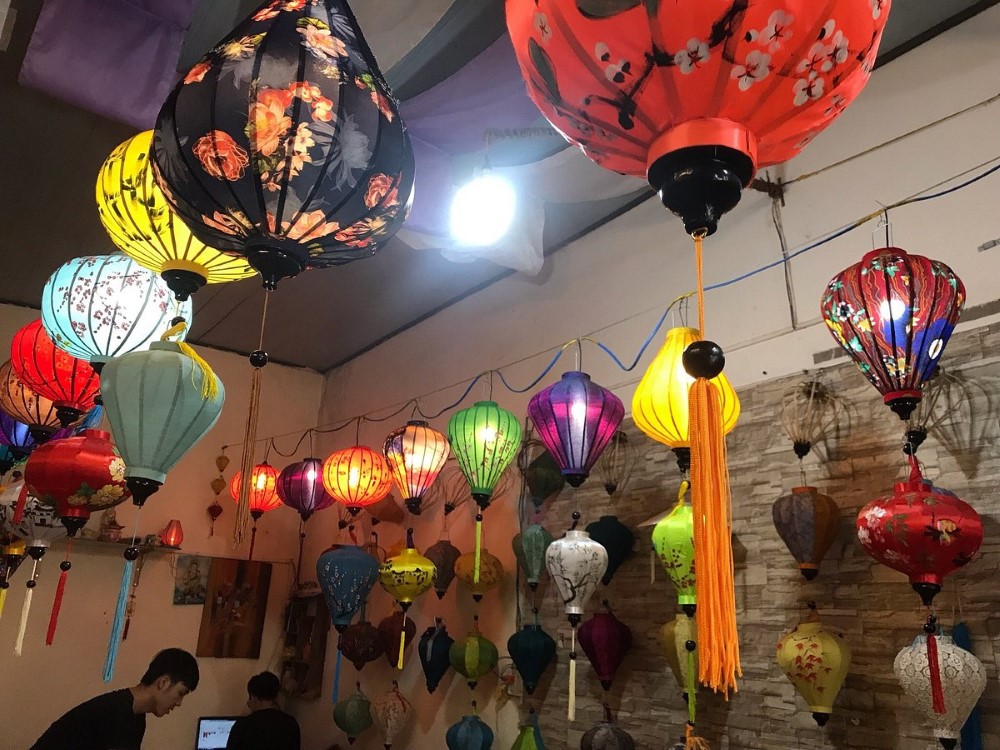
Why Lang Dua Xanh Ensures Flight Ready Lanterns?
Where you make your lantern in Hoi An makes a significant difference in whether your souvenir survives international air travel. Some street workshops use fresh green bamboo that warps or rigid non-collapsible frames that cannot fold into luggage.
At Lang Dua Xanh, located in the Cam Thanh coconut forest, our lantern workshops are designed specifically for international travelers:
- Kiln-Cured Bamboo: We exclusively use mature, salt-boiled, and kiln-dried bamboo that easily passes international agricultural quarantine checks worldwide.
- Precision Collapsible Mechanism: Every frame includes a reinforced metal tension hinge that folds smoothly into an ultra-slim cylinder for luggage storage.
- Non-Toxic Travel Adhesives: We provide quick-drying, odorless water-based craft glues that cure clean and flexible, eliminating chemical smells inside your suitcase.
- Protective Packaging Included: Every workshop participant receives a custom-fit cardboard travel sleeve and tissue wrapping, ensuring your craft is flight-ready before leaving our studio.
- Scenic Tour Combination: You can combine your lantern making workshop with an eco basket boat ride through the Bay Mau coconut groves, enjoying a memorable cultural day in Hoi An.
Frequently Asked Questions
Can I carry a handmade lantern through airport security without checking luggage?
Yes. Airport security checkpoints allow traditional silk lanterns in carry-on baggage. They pass through standard carry-on X-ray scanners just like clothing or books without requiring special security permits or paperwork.
Will TSA confiscate my bamboo lantern at US customs?
No. TSA and US Customs and Border Protection permit finished, decorative bamboo handicrafts. As long as your lantern is fully cured, insect-free, and stripped of raw green bark, it passes customs smoothly. Remember to check “YES” on the customs declaration form for wooden items.
Does a lantern count as my personal item or carry-on bag?
If your collapsed lantern is packed inside your backpack or roller suitcase, it simply counts as part of that bag. If you carry the packaged lantern box separately in your hand, budget airlines may count it as your personal item. Pack it inside your primary cabin bag to avoid extra airline fees.
How many lanterns can I bring home on a plane?
Airlines place no limit on the number of decorative lanterns you can transport, provided your baggage remains within your ticketed weight and dimension allowances. If you are bringing three or more lanterns for family gifts, collapse them flat, stack them together, and wrap them in a single protective bundle.
