Discovering the best things to do in Hoi An Old Town allows you to experience centuries of living history, vibrant street food, and timeless yellow-walled architecture.
This updated 2026 walking guide highlights must-see heritage monuments, sightseeing ticket rules, evening riverboat rides, local food gems, and easy day trips to nearby craft villages.
Why Hoi An Is Vietnam’s Most Enchanting UNESCO Heritage Site?
Hoi An Old Town (Pho Co Hoi An) is Vietnam’s most exceptionally preserved historic trading port, featuring over 1,100 timber-framed architectural monuments that harmoniously blend Vietnamese, Chinese, Japanese, and European commercial traditions dating from the 15th to the 19th centuries.
Unlike other historic trading centers across Southeast Asia that suffered extensive modernization or wartime devastation, Hoi An’s riverfront core retained its original street grid, wooden merchant shophouses, ancestral clan assembly halls, and communal pagodas intact.
The urban layout reflects a grid plan with streets running parallel to the Thu Bon and Hoai rivers, flanked by long, narrow townhouses featuring street-facing commercial shopfronts, open interior courtyards (gieng troi) for light and air circulation, and rear river access for loading merchant cargo.
In recognition of this outstanding universal value, UNESCO inscribed the Ancient Town of Hoi An as a World Heritage Site in December 1999. Today, the municipal government strictly regulates vehicular traffic, barring motorbikes and commercial cars during designated pedestrian hours.
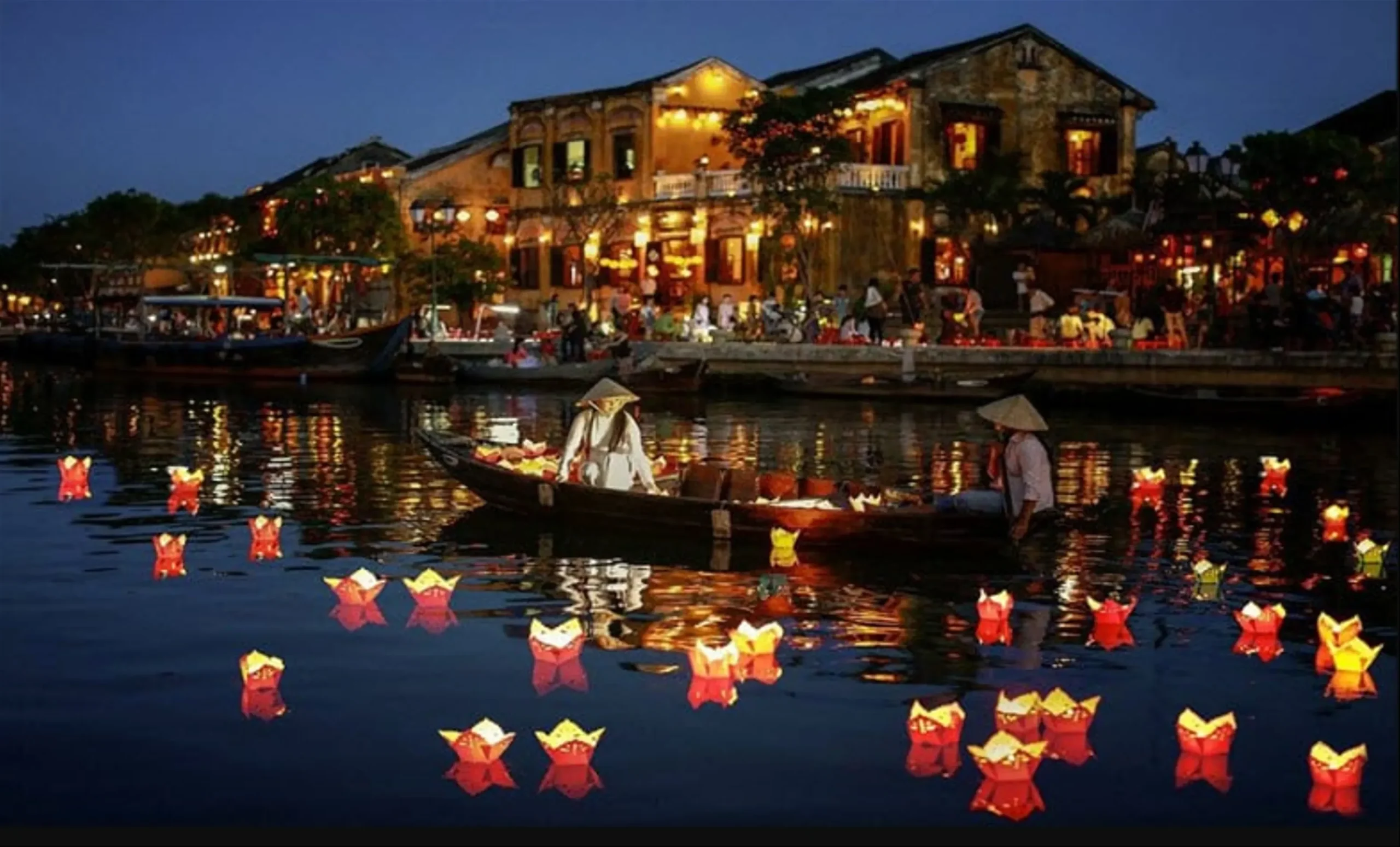
Walking along its cobblestone thoroughfares beneath canopies of pink bougainvillea and glowing silk lanterns feels like stepping directly into an authentic living museum of maritime Asian history.
Top heritage attractions and historic landmarks to visit
Exploring the heritage quarter requires prioritizing key monuments that exemplify the town’s cosmopolitan trade legacy. The comprehensive directory below highlights top historical landmarks within the ticketed heritage zone, detailing architectural origins, signature interior highlights, and practical visitor guidance:
| Landmark Name | Architectural Style & Heritage Era | Signature Highlights | Location & Street | Recommended Visit Time |
|---|---|---|---|---|
| Japanese Covered Bridge (Chua Cau) | Japanese arched bridge with Buddhist temple (Built 1590s) | Weathered timber arch, guardian monkey and dog statues, Taoist altar | West end of Tran Phu Street | 8:00 AM – 9:30 AM (early morning calm) |
| Phuc Kien (Fujian) Assembly Hall | Chinese Fujian merchant guildhall (Built 1697) | Triple-entrance gate, giant incense coils, Thien Hau sea goddess shrine | 46 Tran Phu Street | 9:30 AM – 10:30 AM |
| Cantonese (Quang Dong) Assembly Hall | Cantonese communal meeting hall (Built 1885) | Elaborate ceramic dragon fountain, historical trade documents, courtyard | 176 Tran Phu Street | 10:30 AM – 11:30 AM |
| Tan Ky Ancient House | 7-generation Vietnamese-Chinese timber townhouse (Late 18th century) | Jackfruit wood beams, mother-of-pearl poetry inlays, historic flood markers | 101 Nguyen Thai Hoc Street | 1:30 PM – 2:30 PM (guided talk included) |
| Phung Hung Old House | Two-story timber trading house (Built 1780) | Japanese-style roof brackets, Chinese lantern balconies, attic flood hatch | 4 Nguyen Thi Minh Khai Street | 2:30 PM – 3:15 PM |
| Hoi An Central Market (Cho Hoi An) | French-colonial and traditional trading bazaar | Authentic food court, fresh regional fruits, spice stalls, tailor counters | Tran Phu & Bach Dang intersection | 7:00 AM – 9:00 AM for fresh market energy |
| Museum of Trade Ceramics | Restored timber townhouse museum | Ancient ceramic shards excavated from 13th to 17th century shipwreck sites | 80 Tran Phu Street | 3:30 PM – 4:15 PM |
Walking Route Through the Pedestrian Heritage Quarters
Morning architectural exploration along Tran Phu and Nguyen Thai Hoc
Begin your exploration at 7:30 AM before motorized traffic restrictions take effect and tour group buses arrive:
- Walk westward along Tran Phu Street, admiring the intricate tiled pediments of the Fujian and Cantonese assembly halls under soft morning sunlight.
- Pause at the Japanese Covered Bridge to observe the delicate joinery connecting timber trusses to stone abutments across the narrow canal.
- Stop at an open-air cafe near the corner of Le Loi for a glass of traditional Vietnamese drip coffee (Ca Phe Phin) while watching local residents sweep courtyard leaves.
- Step into Tan Ky Ancient House to examine centuries-old hardwood beams fitted without iron nails, noting the copper flood markers carved into wooden pillars documenting historic Thu Bon water crests.
Midday culinary immersion and artisan craft market browsing
As midday temperatures climb between 11:30 AM and 2:00 PM, retreat into shaded indoor markets and air-conditioned heritage ateliers:
- Head to the food court inside Hoi An Central Market to enjoy authentic regional specialties prepared on hot charcoal braziers.
- Explore the craft boutiques lining Nguyen Thai Hoc Street, featuring bespoke leather workshops, organic silk weavers, and handmade silver jewelers.
- Visit historic tea salons like Reaching Out Arts and Crafts on Tran Phu for a mindful silent tea-tasting experience served by artisans with hearing impairments.
- Climb to the second-floor open veranda of a rooftop cafe on Tran Phu to capture elevated landscape photographs of curved moss-covered yin-yang tile roofs stretching toward the river.
Sunset riverfront stroll and evening lantern illuminated ambiance
The evening hours from 5:00 PM onward represent the sensory peak of the Old Town experience:
- Stroll along the Bach Dang riverfront promenade as boatmen prepare traditional wooden sampans at the municipal dock.
- Cross the pedestrian An Hoi bridge to the night market on Nguyen Hoang street, where hundreds of glowing silk lanterns illuminate stalls selling street food and handicrafts.
- Board a flat-bottom wooden boat for a tranquil 20-minute twilight cruise, releasing a candle-lit paper lotus flower into the river to wish for good fortune.
- Listen to live acoustic Bai Choi folk singing games echoing from open-air courtyards along the water edge until pedestrian hours end at 9:30 PM.

Cost Breakdown and Pricing for Old Town Activities
| Activity / Service Item | Description & Inclusions | Standard Rate (VND) | Fixed Rate (USD) | Ticketing & Payment Details |
|---|---|---|---|---|
| Old Town Heritage Sightseeing Ticket | Entry pass to 5 designated heritage sites (valid for 10 days) | 120,000 VND | $5.00 USD | Official municipal tourism kiosks at town entry gates |
| Hoai River Wooden Sampan Cruise | 20-minute guided scenic boat ride for 1 to 4 passengers | 150,000 – 200,000 VND | $6.00 – $8.00 USD | Fixed municipal rate at Bach Dang riverboat ticket booths |
| Paper Flower Wishing Lantern (Den Hoa Dang) | Origami lotus flower float with paraffin candle and bamboo lowering pole | 10,000 – 20,000 VND | $0.40 – $0.80 USD | Direct from mobile vendors along river embankment steps |
| Bowl of Authentic Cao Lau Noodles | Pork, crispy rice croutons, greens, and thick noodles in savory broth | 35,000 – 50,000 VND | $1.40 – $2.00 USD | Central Market food court and local street eateries |
| Legendary Hoi An Banh Mi Sandwich | Crusty baguette filled with pate, roast pork, herbs, and homemade sauce | 25,000 – 35,000 VND | $1.00 – $1.40 USD | Banh Mi Phuong, Madam Khanh The Banh Mi Queen |
| Traditional Mot Herbal Drink | Refreshing iced herbal infusion with lotus leaf, lemongrass, and ginger | 15,000 VND | $0.60 USD | Street stand at 150 Tran Phu Street |
| Half-Day Cam Thanh Basket Boat Combo | 45-min coconut boat ride + traditional lantern making workshop | 250,000 – 320,000 VND | $10.00 – $13.00 USD | Advance reservation at Green Coconut Village Cam Thanh |
Best local food specialties you must try in the Old Town
Cao Lau pork noodles with well water from Ba Le
Cao Lau represents the culinary crown jewel of Hoi An, found nowhere else in Vietnam with authentic flavor:
- The firm, chewy noodles are soaked in water mixed with alkaline ash harvested from wild Cham Island firewood, imparting a distinct grayish-yellow hue.
- Authentic broth requires clear, cool water drawn exclusively from the ancient thousand-year-old Ba Le well in Cam Chau commune.
- Bowls are dressed with tender five-spice char siu pork slices, crispy square rice cracker croutons, and fresh bitter mint sourced daily from nearby Tra Que vegetable village.
White Rose dumplings and crispy fried wontons
These delicate appetizers reflect the culinary integration of Chinese and Vietnamese migrant techniques:
- White Rose dumplings (Banh Bao Banh Vac) consist of translucent rice paper skins pinched into flower petal shapes, encasing seasoned minced shrimp and wood ear mushroom.
- Dumplings are steamed gently, topped with crispy golden fried shallots, and served with a balanced sweet fish sauce dip.
- Crispy fried wontons (Hoanh Thanh Chien) feature deep-fried wonton pastry sheets topped with a sweet-and-sour salsa of diced shrimp, pork, pineapple, and tomato.
World-famous Hoi An banh mi sandwiches
Hoi An’s take on the classic Vietnamese baguette achieved global acclaim through culinary legends Anthony Bourdain and Gordon Ramsay:
- The secret lies in the extra-crispy, pointed-end baguette baked in wood-fired stone deck ovens, creating an airy crumb that never becomes soggy.
- Banh Mi Phuong on Phan Chu Trinh layers rich pork liver pate, char siu pork, cured ham, pickled papaya, cilantro, and secret braising gravy.
- Madam Khanh on Tran Cao Van offers a balanced profile featuring caramelized roast pork, fried egg, cucumber strips, and house-made chili jam.

Old Town Visitor Checklist and Etiquette Guidelines
Old Town walking tour preparation checklist
- Sightseeing ticket preservation: Keep your physical paper ticket intact, as each of the 5 perforated attraction coupons is stamped individually at monument entrances.
- Appropriate footwear: Wear flat walking shoes or cushioned walking sandals, as exploring the pedestrian grid involves 4 to 6 kilometers of walking on stone surfaces.
- Climate protection: Carry a lightweight foldable umbrella and compact sunscreen during the hot dry months from April through August.
- Respectful attire: Wear clothing covering shoulders and knees when touring active religious temples, including assembly halls and clan pagodas.
- Itinerary combination: Dedicate the cooler morning hours to a basket boat tour and lantern workshop at Green Coconut Village in Cam Thanh before heading into the Old Town for afternoon sightseeing and evening dining.
Cultural preservation and street etiquette
Sustaining the living heritage of Hoi An requires thoughtful visitor conduct:
- Refrain from climbing on fragile timber railings, touching historic lacquer carvings, or leaning against centuries-old wooden pillars inside private family homes.
- Ask courteous permission before photographing local artisans, market vendors, or elderly residents resting on their front verandas.
- Support fair-trade social cooperatives and direct craft village producers rather than purchasing imported mass-produced trinkets from unregistered mobile touts.
- Dispose of street food containers and drink cups in municipal recycling bins stationed along the riverfront to keep waterways pristine.

Frequently asked questions about visiting Hoi An Old Town
Is the Hoi An Old Town entrance ticket strictly mandatory?
The official 120,000 VND ($5.00 USD) sightseeing ticket is mandatory if you plan to enter any of the 22 designated heritage monuments, including the Japanese Covered Bridge, Chinese assembly halls, historic clan houses, and traditional museums.
Walking through the open public streets, dining at riverside restaurants, and browsing souvenir stalls does not require a ticket. However, purchasing a ticket is highly recommended because it directly finances the architectural preservation of the ancient timber monuments.
How much time is needed to explore Hoi An Old Town thoroughly?
A full day is recommended to experience the heritage town thoroughly without rushing. Spend the morning touring key architectural landmarks and assembly halls, enjoy local noodle specialties for lunch, browse custom tailor and craft boutiques during the midday heat, and spend the evening enjoying the lantern-lit riverfront, night market, and wooden boat rides.
Many travelers choose to spend 2 to 3 days in the area to combine Old Town walks with cycling in Cam Thanh and relaxing at An Bang Beach.
What are the official pedestrian-only hours in the Old Town?
Motorbikes, gas scooters, and commercial passenger cars are banned from the Old Town during official pedestrian hours: from 9:00 AM to 11:00 AM in the morning, and from 3:00 PM to 9:30 PM in the afternoon and evening.
During these hours, only pedestrians, non-motorized bicycles, and traditional cyclos are permitted on historic streets, creating a peaceful, quiet atmosphere for sightseeing and photography.
